How to Improve Your Credit Score: Proven Strategies That Actually Work
Learn how to improve your credit score with practical, proven strategies—from reducing utilization to building a positive payment history.
Your credit score is one of the most powerful numbers in your financial life. It influences whether you get approved for a loan, what interest rate you pay on a mortgage, and even whether a landlord accepts your rental application. The good news? Unlike your height or your age, your credit score is something you can actively change. With the right habits and a clear understanding of how scoring works, meaningful improvement is entirely within reach.
Understanding What Goes Into Your Credit Score
Before you can improve your score, you need to understand what drives it. In the United States, the most widely used model is the FICO score, which ranges from 300 to 850. VantageScore is another common model lenders use. While each model weighs factors slightly differently, they share the same core components:
- Payment history (~35%): Whether you pay your bills on time.
- Credit utilization (~30%): How much of your available revolving credit you're using.
- Length of credit history (~15%): How long your accounts have been open.
- Credit mix (~10%): The variety of credit types you hold (credit cards, loans, mortgage).
- New credit inquiries (~10%): How recently and how often you've applied for new credit.
Knowing which factors carry the most weight tells you where to focus your energy first. Payment history and utilization together account for nearly two-thirds of your score — so those are your highest-leverage levers.
Step 1: Never Miss a Payment
A single missed payment can drop your score by dozens of points, and the damage lingers on your credit report for up to seven years. Building a flawless payment history is the single most impactful thing you can do for your score over time.
Set up autopay for at least the minimum payment due on every account. This acts as a safety net even if you forget a due date. Then, whenever possible, pay your balance in full each month — not just to protect your score, but to avoid interest charges that compound quickly.
If you've already missed payments in the past, don't panic. Their impact diminishes over time, especially as you build a consistent record of on-time payments going forward.

Step 2: Reduce Your Credit Utilization Ratio
Credit utilization is the percentage of your total revolving credit limit that you're currently using. If you have a $10,000 combined credit limit across all your cards and you're carrying a $4,000 balance, your utilization is 40%. Most experts recommend keeping it below 30%, and ideally under 10% if you want a top-tier score.
There are a few effective ways to lower your utilization:
- Pay down balances: The most direct approach. Even making a mid-cycle payment before your statement closes can lower the balance that gets reported to the bureaus.
- Request a credit limit increase: If you've been a responsible cardholder, many issuers will grant a higher limit without a hard inquiry. This instantly lowers your utilization ratio without changing your spending.
- Spread spending across cards: If one card is near its limit, shifting purchases to a card with more available headroom can help keep individual utilization low.
Keep in mind that utilization is recalculated every month based on the balance reported by your issuer — usually the statement balance. This means it can bounce back quickly once balances are paid down, which is genuinely good news.
Step 3: Don't Close Old Accounts
It might feel tidy to close a credit card you no longer use, but doing so can hurt your score in two ways. First, it reduces your total available credit, which increases your utilization ratio. Second, it can shorten your average account age, which affects your length of credit history.
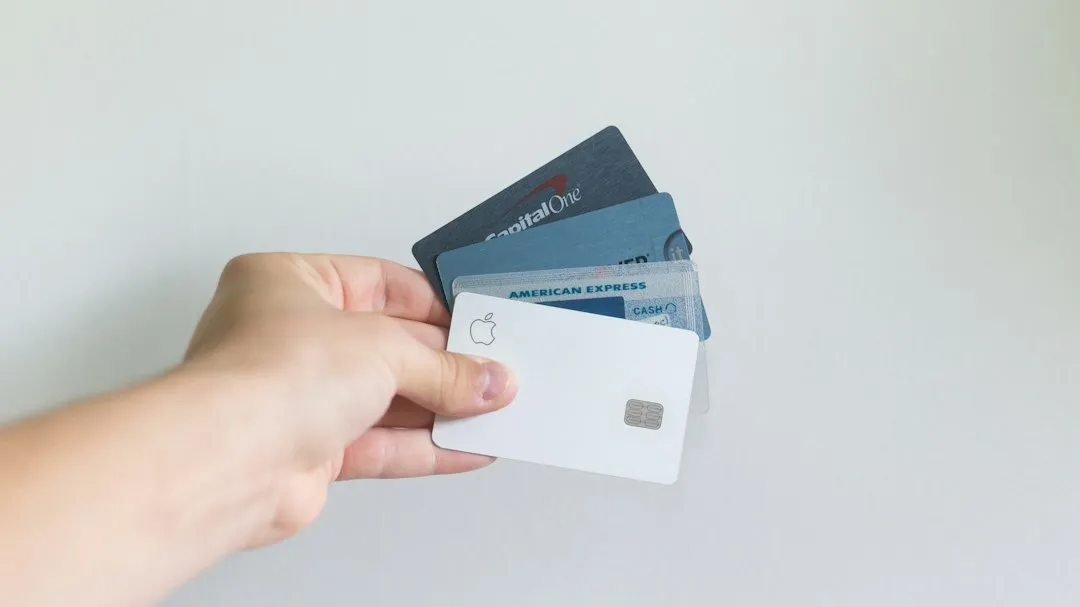
If you have a no-annual-fee card sitting in a drawer, consider keeping it open and making a small purchase on it once every few months. This keeps the account active without any cost to you. Cards like the Apple Card and the Capital One Savor charge no annual fee, making them easy to hold long-term even if they're not your primary card.
Step 4: Limit Hard Inquiries
Every time you apply for a new credit card or loan, the lender typically performs a hard inquiry on your credit report. Each hard inquiry can temporarily ding your score by a small amount. While one or two won't cause serious damage, applying for multiple credit products in a short window can signal financial stress to lenders and compound the effect.
Be strategic about applications. Research your options carefully before applying for your first credit card — or any card — so you're applying only when you're confident you'll be approved and the product genuinely fits your needs.
Note that rate-shopping for mortgages or auto loans within a short window (typically 14–45 days) is usually treated as a single inquiry by scoring models, so don't let this concern stop you from comparing loan offers.

Step 5: Check Your Credit Report for Errors
Errors on credit reports are more common than most people realize. A study by the Federal Trade Commission found that a significant percentage of consumers have at least one error on their credit report that could affect their score. Under U.S. law, you're entitled to a free copy of your credit report from each of the three major bureaus — Equifax, Experian, and TransUnion — through AnnualCreditReport.com.
Review each report carefully for:
- Accounts you don't recognize (possible fraud or identity theft)
- Late payments incorrectly reported
- Balances that don't reflect what you currently owe
- Duplicate accounts or incorrect personal information
If you find an error, you have the right to dispute it directly with the bureau. The CFPB (Consumer Financial Protection Bureau) provides free resources and templates to help you file disputes effectively. Correcting even a single error can result in a meaningful score jump.
Step 6: Diversify Your Credit Mix Thoughtfully
Having only one type of credit account — say, just credit cards — is slightly less favorable than having a mix that includes both revolving credit (cards) and installment credit (auto loans, student loans, personal loans). Lenders like to see that you can manage different types of debt responsibly.
That said, don't take out a loan just to improve your credit mix. The benefit is modest, and taking on unnecessary debt is never a sound financial strategy. If you're already paying off a student loan or car payment, those accounts are actively working in your favor.
How Long Does It Take to See Results?
Credit improvement is a marathon, not a sprint. Some actions — like paying down a high balance — can show up in your score within a billing cycle or two. Others, like building a longer credit history, take years of consistent behavior.
A realistic timeline for someone starting from a fair score might look like this: noticeable improvement within 3–6 months of consistent on-time payments and lower utilization, significant improvement within 12–18 months if negative marks are aging off and good habits are maintained.
Once your score is in a healthy range, protect it by continuing the same habits. Maximizing credit card rewards becomes far more accessible when you qualify for better products with lower APRs and stronger sign-up bonuses. And when you're ready to build your financial cushion alongside a strong credit profile, the two reinforce each other — giving you resilience and flexibility at the same time.
Key Takeaways
- Pay every bill on time — this is the single biggest factor in your score.
- Keep credit utilization below 30%, ideally under 10%.
- Don't close old accounts; keep no-fee cards open and occasionally active.
- Limit hard inquiries by applying for credit only when you're genuinely ready.
- Check your credit reports regularly for errors and dispute inaccuracies promptly.
- Let your credit mix grow naturally as your financial life evolves.
Improving your credit score isn't about gaming the system — it's about demonstrating consistent, responsible financial behavior over time. The habits that raise your score are the same habits that set you up for long-term financial health.

Ethan Kowalski
Personal finance writer based in Chicago, focused on credit cards, rewards programs, and consumer banking.